
 Smart Hatching
A different path for the laser.
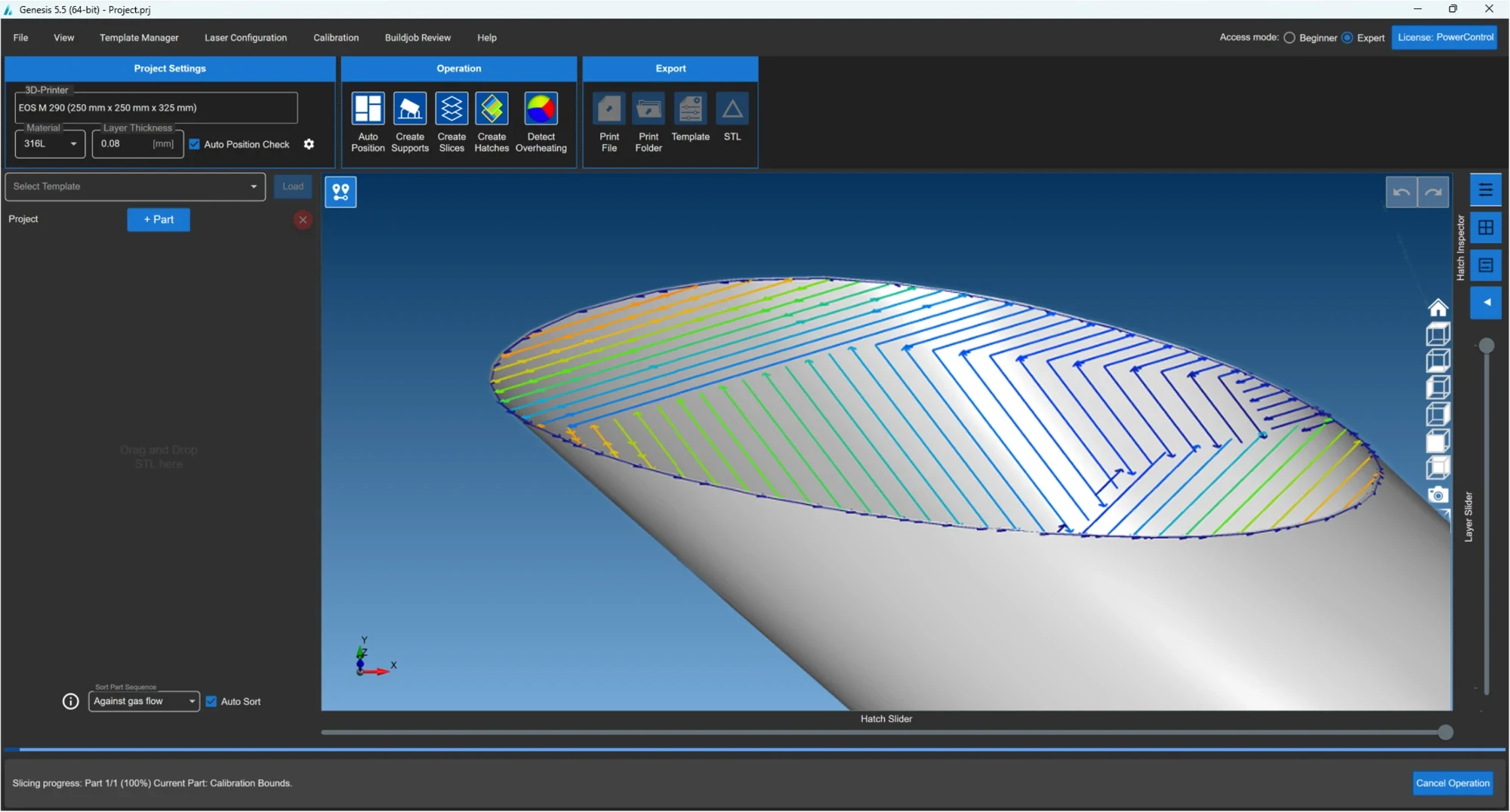
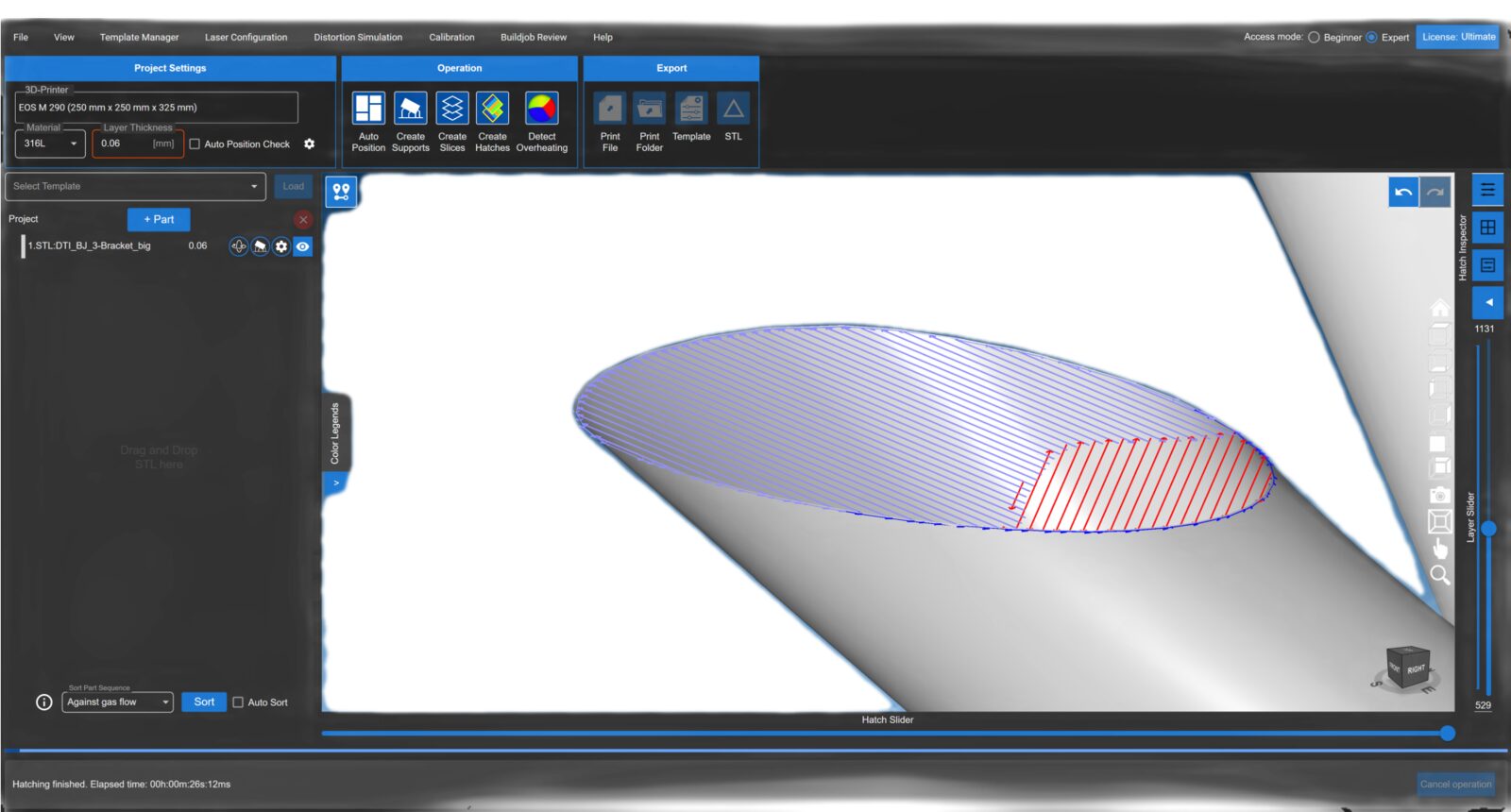
Hatch orientation and sequence derived from the local heat — within your approved OEM parameters.
Runs on




Get the highlights.
Hatching steered
by physics.
Up to 95 % less
support.
Your OEM parameters
stay approved.
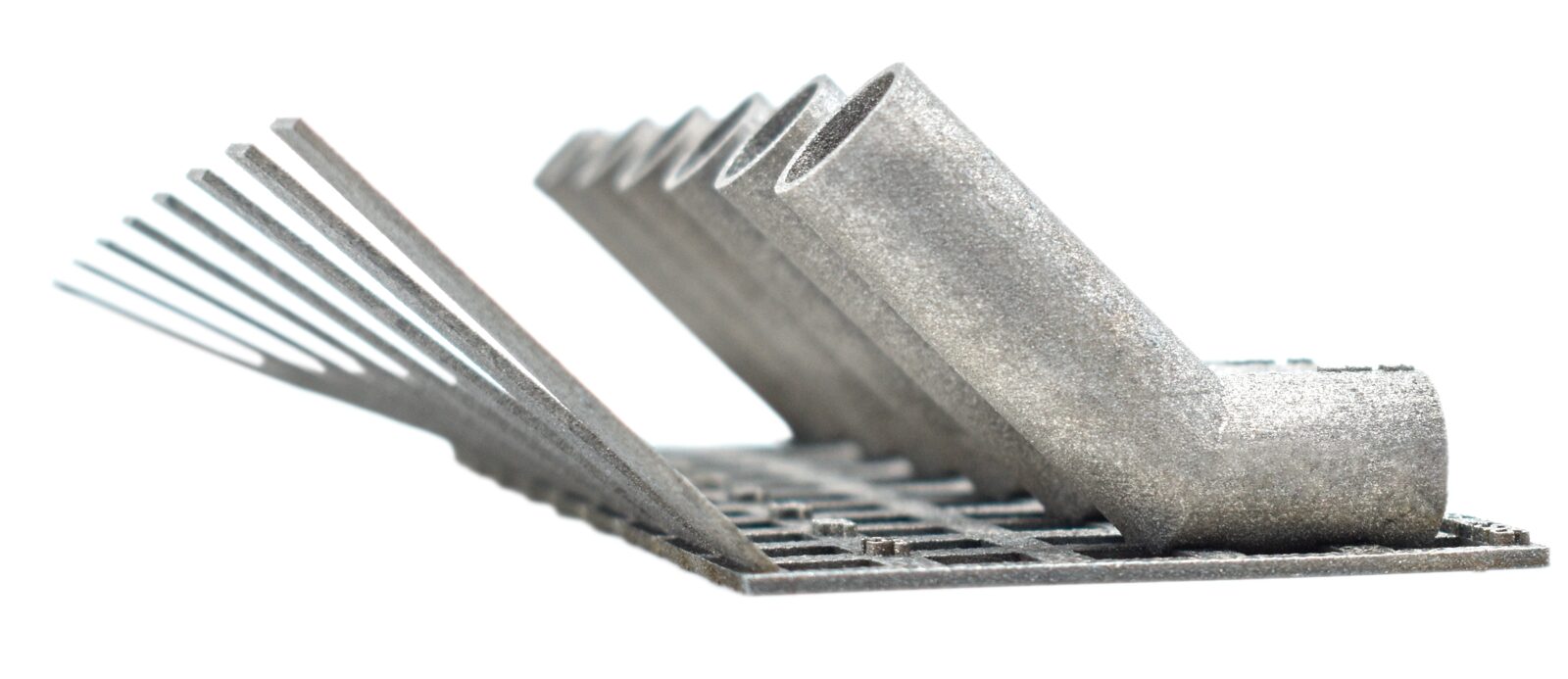
Overhangs down to 14°.
Without support.
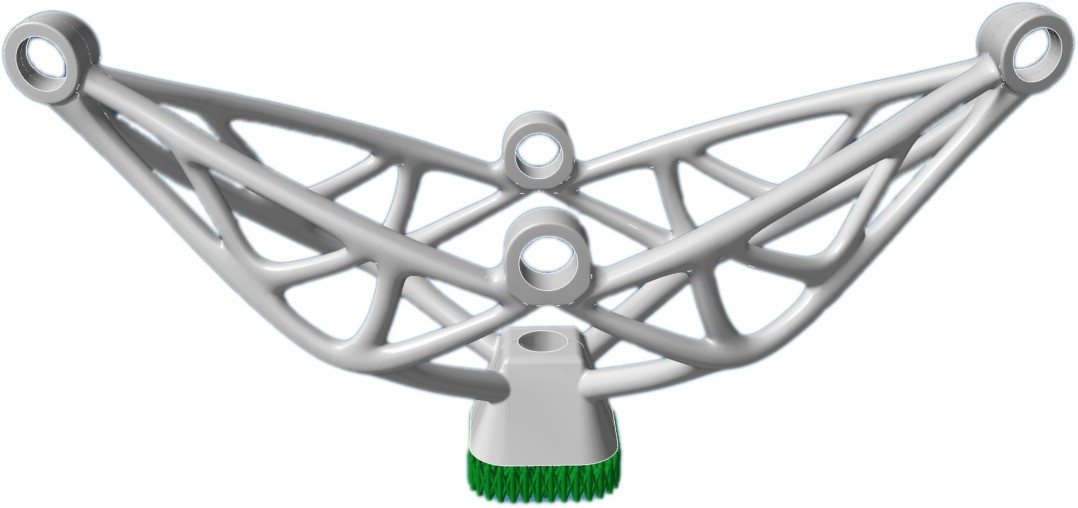
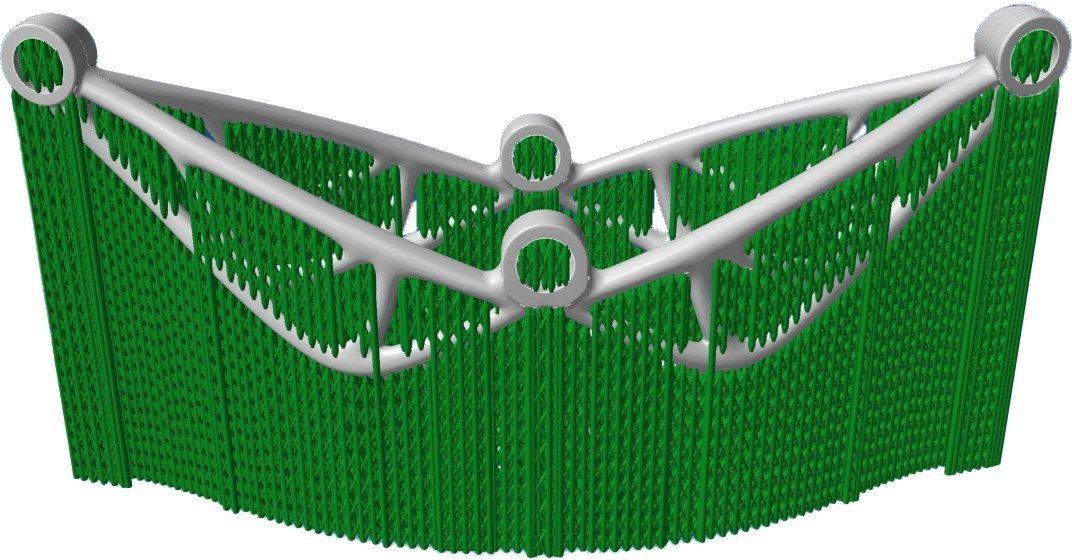
Same bracket.
Almost no support.
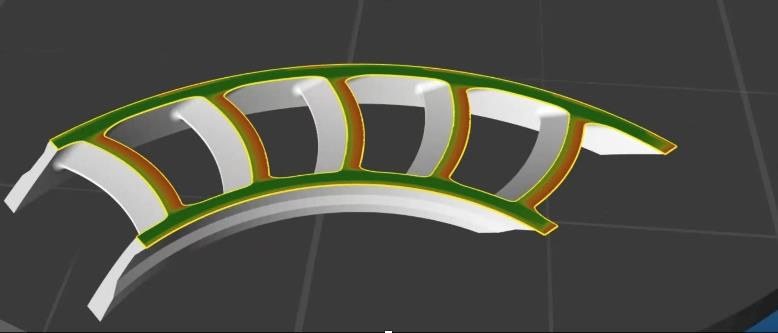
Prepared conventionally, then with Smart Hatching: the support net nearly disappears — and with it build time, powder and hours of manual removal.
20°
support-free, Ti64
0°
on test geometries
−95 %
support volume
Not different parameters. A different path.
Sequence and orientation adapted. To the local thermal situation — for example from the core towards the overhang, and against the shielding-gas flow.
Heat is steered away, not treated afterwards. The intervention happens where the heat forms.
Dramatically fewer supports. Overhangs print support-free where the geometry used to demand support structures.
Which GENESIS is right for you?
Print Suite
For AM teams preparing build jobs.
- Desktop application
- Build Engine with Fast Heat Simulation
- Smart Hatching add-on
- Power Control add-on
API
For machine builders and automated pipelines.
- An interface — no desktop in the loop
- The same simulation core
- Simulation-based strategy generation
- Calibrated per machine in two build jobs
The modules inside the Print Suite
Frequently asked questions
Does Smart Hatching change our process parameters?
No. The approved OEM parameters remain the boundary condition. What changes is how the laser moves — hatch sequence and orientation.
How is this different from applying different parameters locally?
It is not about using different parameters in one place. It is about changing the path the laser takes where it matters thermally.
Which angles are demonstrated?
Ti64 20°, 316L 20°, CoCr 20°, IN718 15°, AlSi10Mg 14°, M789 25°, AlSi7Mg0.6 25° — from evaluations on seven OEM platforms.
What do users say?
Aconity3D: "The AMSIS hatching technology for reducing support structures and distortion is unique on the market." Premium Aerotec report the achievable support-free overhang improving from 45° to 23° in first tests.
Ready to get started?