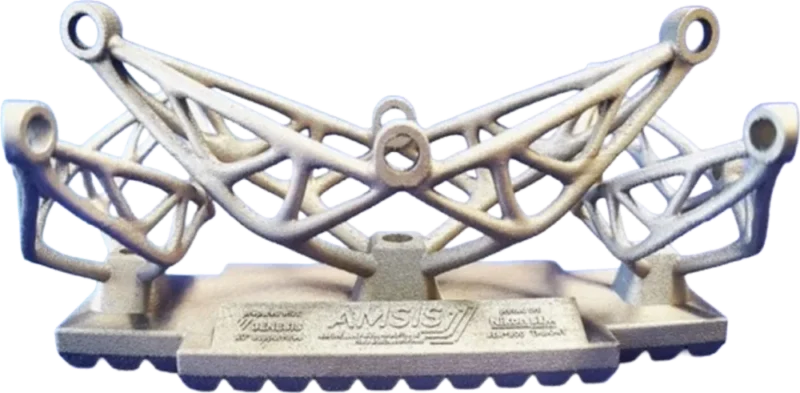
Aerospace Bracket
- Material
- Ti64
- Overhang
- down to 20°

Industry
For machine builders and service bureaus, physics is not an end in itself — it is a selling point. The GENESIS API brings the simulation straight into your software or your production pipeline.
Throughput, integration and a differentiator beyond price: anyone selling additive manufacturing as a service, or selling machines, competes on reliability. A shifting part mix across many customers and machines makes experience-led preparation expensive.
What GENESIS does
Thermal simulation and strategy generation as an interface into automated additive manufacturing processes.
Already evaluated on seven OEM platforms, with demonstrated overhang angles per material.
A shifting part mix is exactly the case where a computed method beats an experience-led one.
Typical parts
A shifting part mix across customers, machines and materials
In practice
A shifting part mix across customers, machines and materials
7
OEM platforms
7
materials demonstrated
14°
best angle, AlSi10Mg
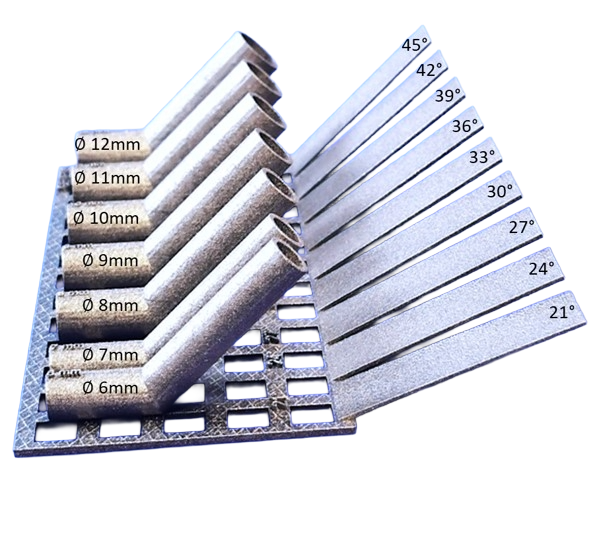
Ti64 20° · AlSi10Mg 14° · 316L 20° · IN718 15° · CoCr 20° · M789 25° · AlSi7Mg0.6 25°.
Renowned universities and companies trust GENESIS





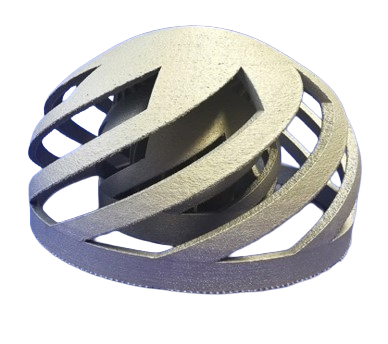
Real parts, prepared in GENESIS and printed on production machines.
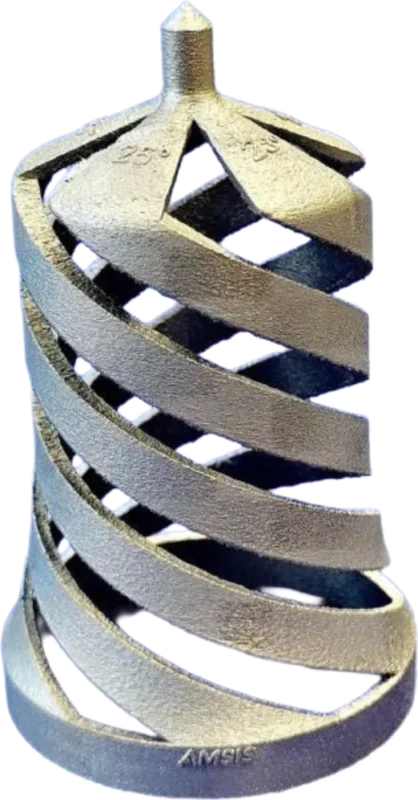
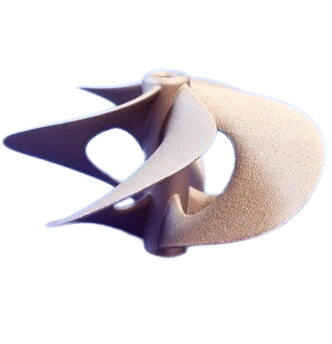
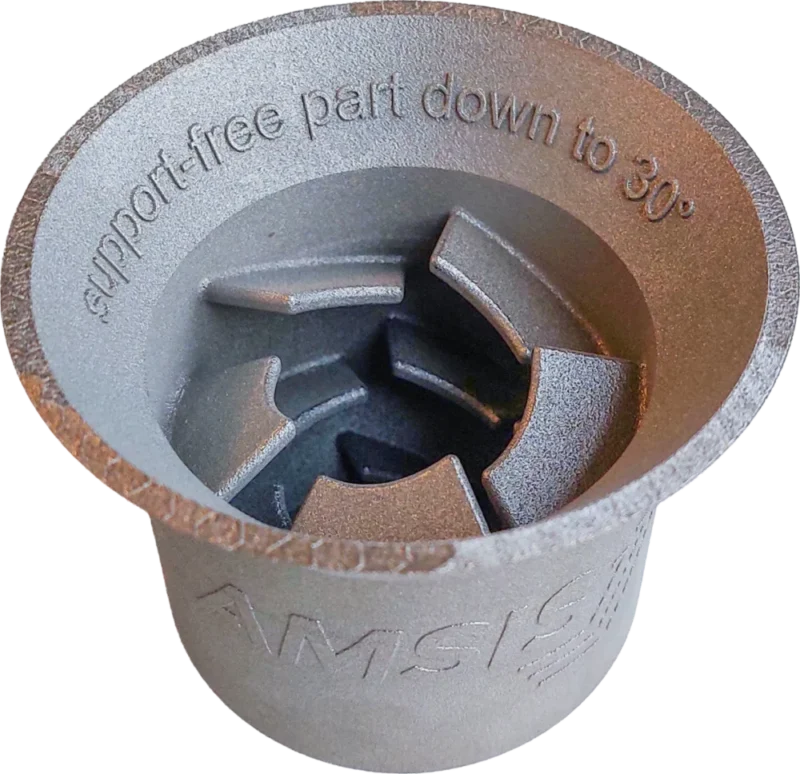
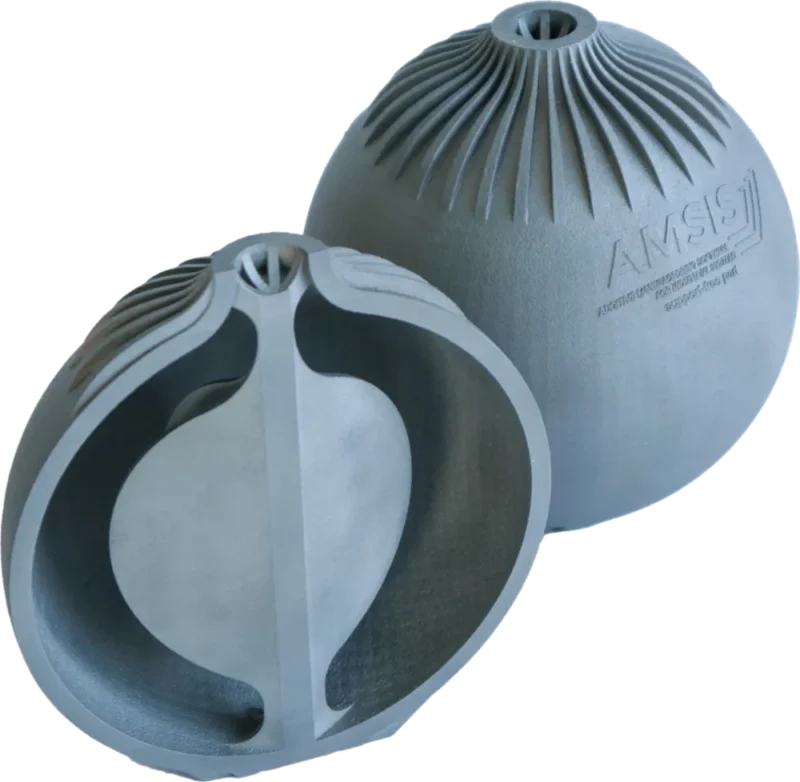
It exposes Fast Heat Simulation and simulation-based strategy generation as an interface, so both run inside automated pipelines rather than depending on a desktop application.
Worth a conversation — integration into LPBF systems is one of the two ways GENESIS is used.
Calibration for a machine and material combination needs two factors and two build jobs, thermal and mechanical.
A complete build job can be prepared simulation-based in 82 seconds — fast enough to run at a productive cadence.
Ready to get started?