
Solution
Additive manufacturing that adds up
Serial production starts where unit costs can be calculated. Deterministic process behaviour is the precondition — and the point at which prototyping becomes production.
The arithmetic on a real serial part
A topology-optimised bracket in serial production, calculated twice: once prepared conventionally, once with GENESIS. Same machine, same material, same volume.
Four levers on the business case
Predictable costs
Fewer failed builds and predictable preparation make cost per part something you can quote rather than guess.
Shorter lead times
Fewer iteration loops and less post-processing shorten the path from data to part — by up to 70 %.
Fewer supports
Up to 95 % less support volume: less powder, less machine time, less manual removal.
Scale
Repeatable behaviour is what lifts metal additive manufacturing out of prototyping.
Seen on a part
What this looks like in the build
Serial production starts where unit costs can be calculated. Deterministic process behaviour is the precondition — and the point at which prototyping becomes production.
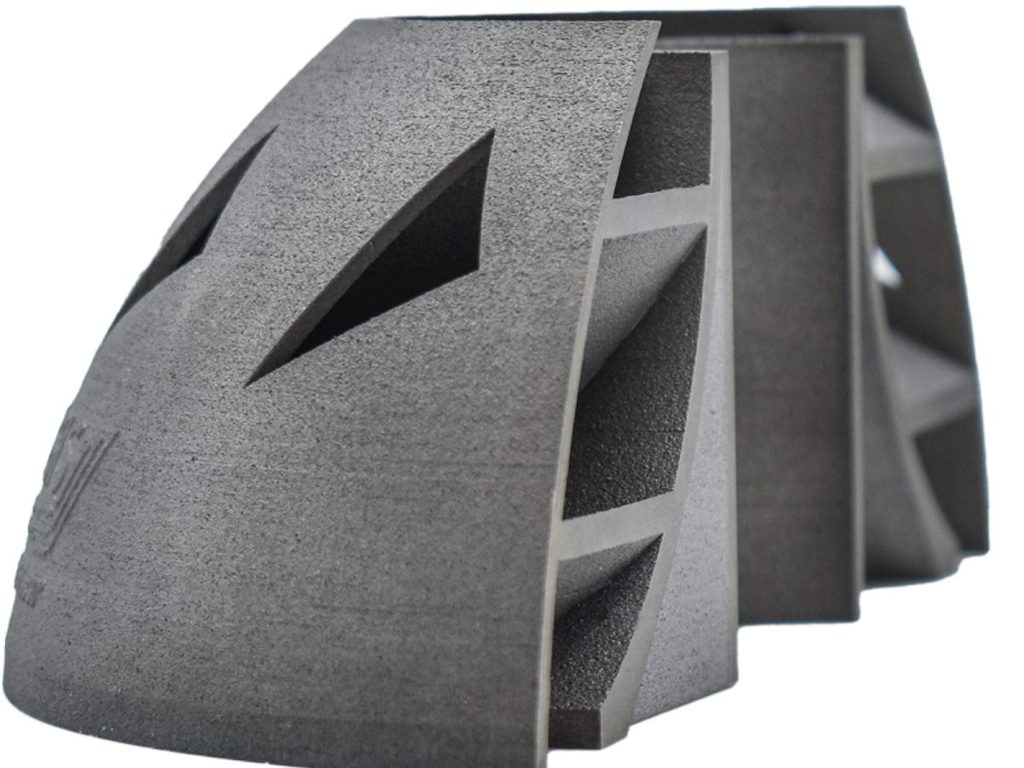
A real serial part, recalculated
One Ti64 aerospace bracket, costed across a full build job — not a projection.
Prepared with standard software
Prepared with GENESIS
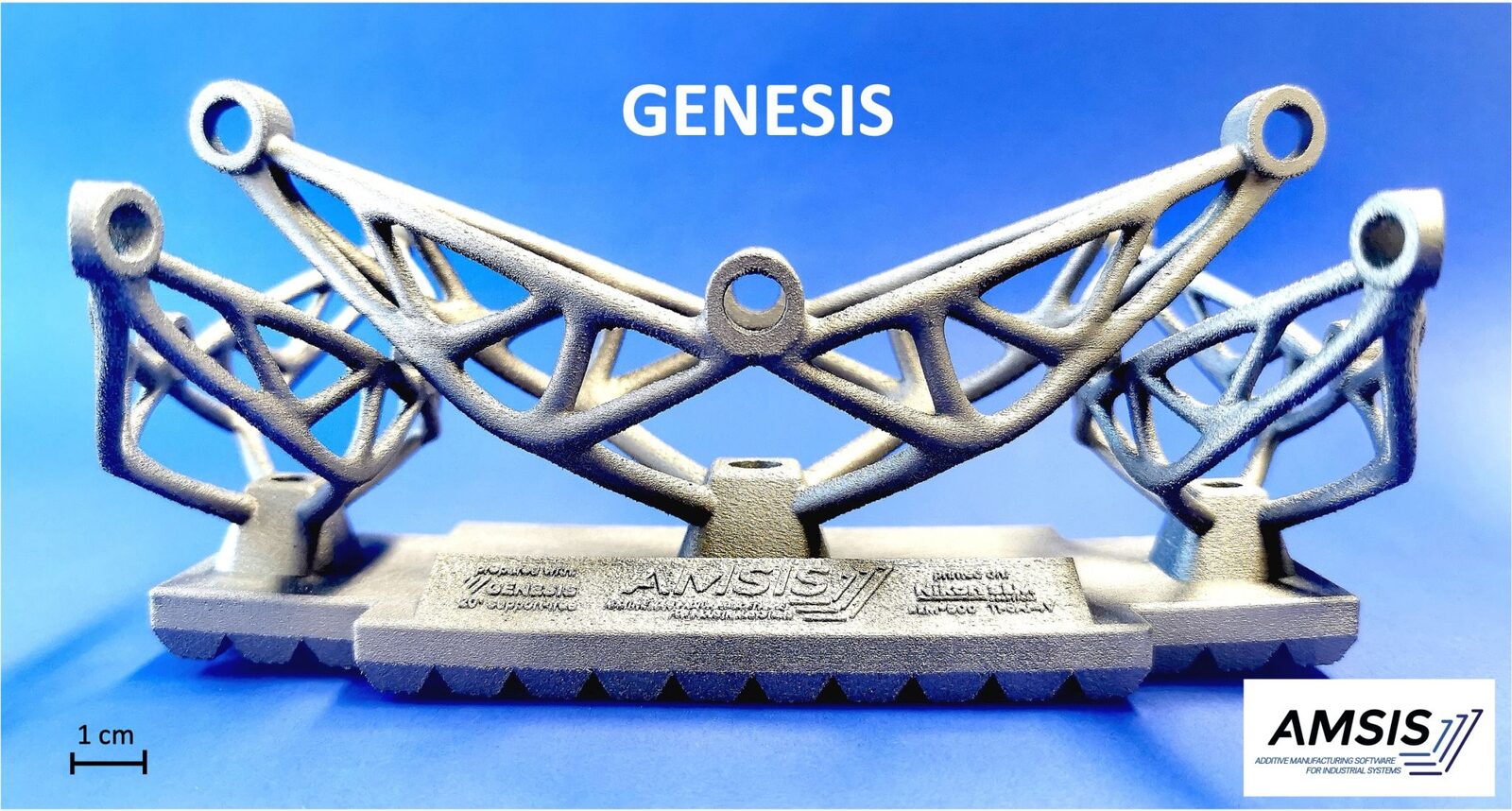
Standard software against GENESIS
−29 %
cost per part
−94 %
support removal per job
under 1 month
payback
The saving compounds from year one and keeps growing for as long as the same part stays in production.
The software behind it
What you are trying to solve
Frequently asked questions
Where do these numbers come from?
From a real customer build job: the same topology-optimised bracket, prepared once conventionally and once with simulation. Your numbers depend on part, material and machine — we are happy to work them through with you.
What is the single biggest lever?
Support removal: 8 hours against 0.5 hours per build job is the line that translates most directly into labour cost.
How long does introduction take?
Demo, pilot on one of your parts, then adoption into production — on the desktop or automated through the GENESIS API.
What does qualification require?
Two calibration factors and two build jobs, thermal and mechanical.
Ready to get started?