
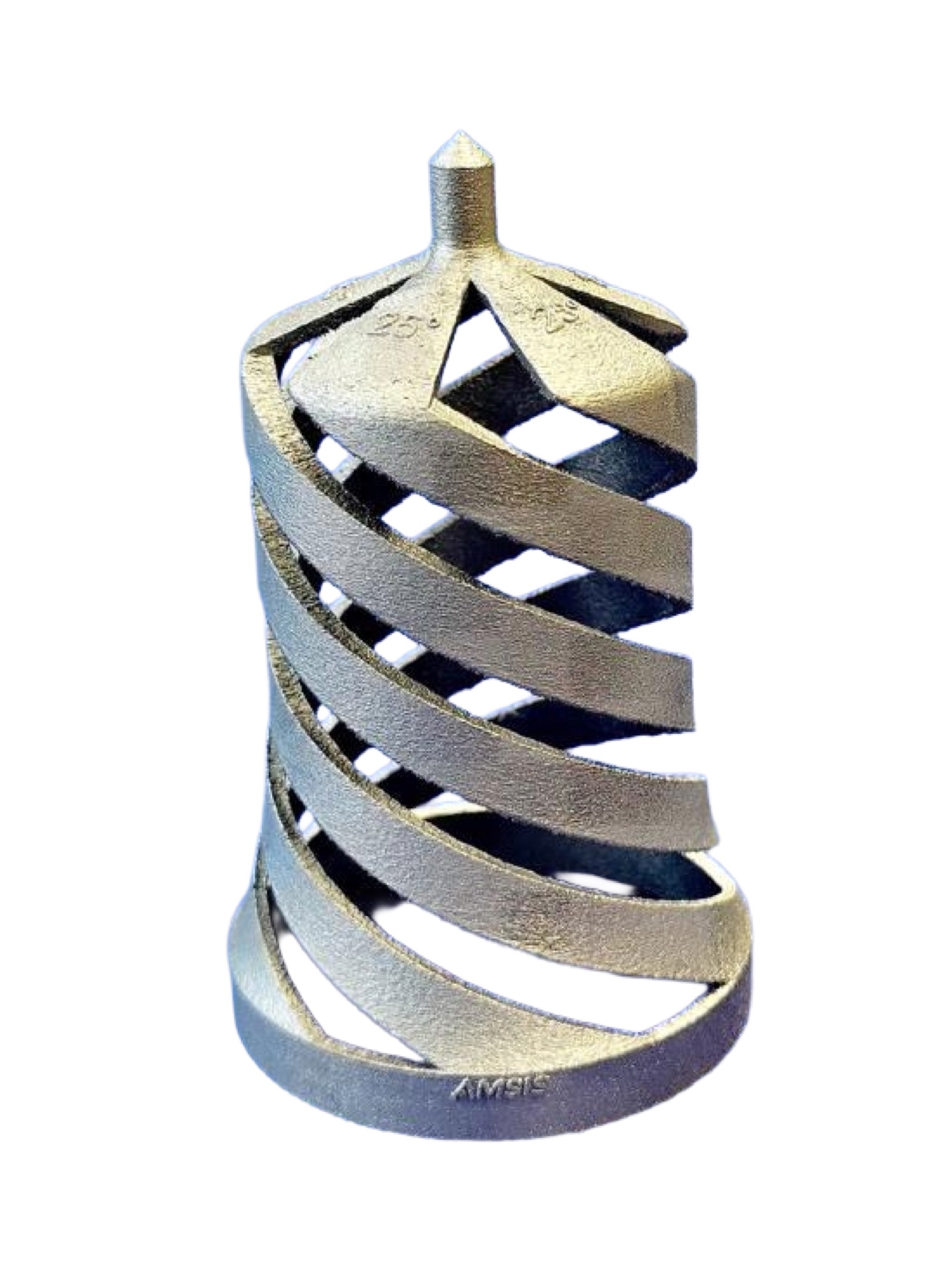
Solution
Full speed without losing quality
On high-power machines, thin walls and sharp corners have forced a compromise: productivity or quality. Locally controlled laser power removes that trade-off.
Constant power is rarely optimal
A single global parameter set treats a 0.5 mm wall like a solid section. The result is local overheating on fine features — or a machine throttled overall, giving away productivity everywhere.
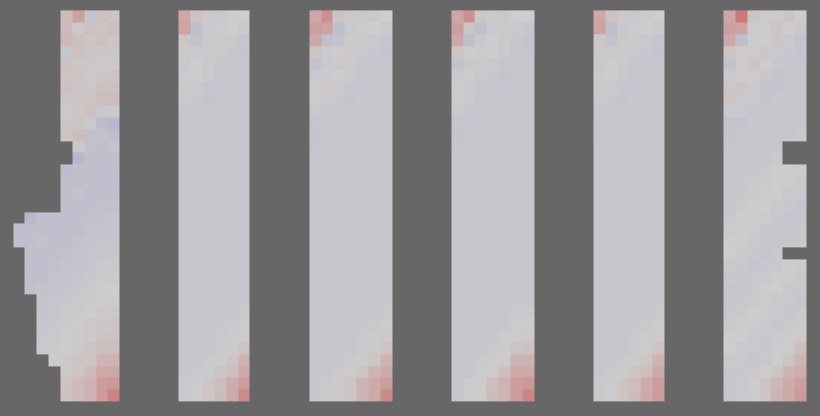
The same part, twice
Drag to remove the overheating
The same layer, once with the same laser power everywhere and once with the power adapted locally.
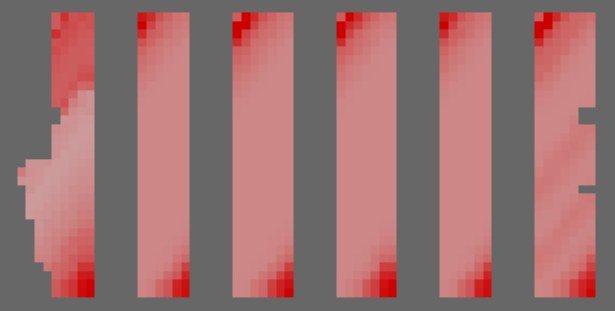
 Constant power
Adapted power
Constant power
Adapted power
Thin walls and sharp corners print cleanly at full productivity — the power adapts locally instead of the machine being slowed down.
How GENESIS solves it
Power per hatch
An additional simulation determines the required laser power locally — for individual hatches, and within a single hatch.
Predict the pre-exposure temperature
GENESIS predicts the temperature field each layer is exposed onto, based on wall thickness and hatch orientation.
No need to throttle
Thin walls, sharp corners and fine features print cleanly without slowing the whole machine down.
What process stability is worth
+50 %
machine utilisation
−70 %
throughput time
2–3×
less post-processing
Best demonstrated values from AMSIS customer projects and technology evaluations; results depend on geometry and process.
The software behind it
What you are trying to solve
Frequently asked questions
Is Power Control available?
Yes — both the pre-exposure temperature simulation and in-layer power adaptation.
Which machines benefit most?
High-power machines, because that is where the trade-off between productivity and overheating is sharpest.
How fine is the control?
Down to the individual hatch, and in future within a single hatch.
Ready to get started?